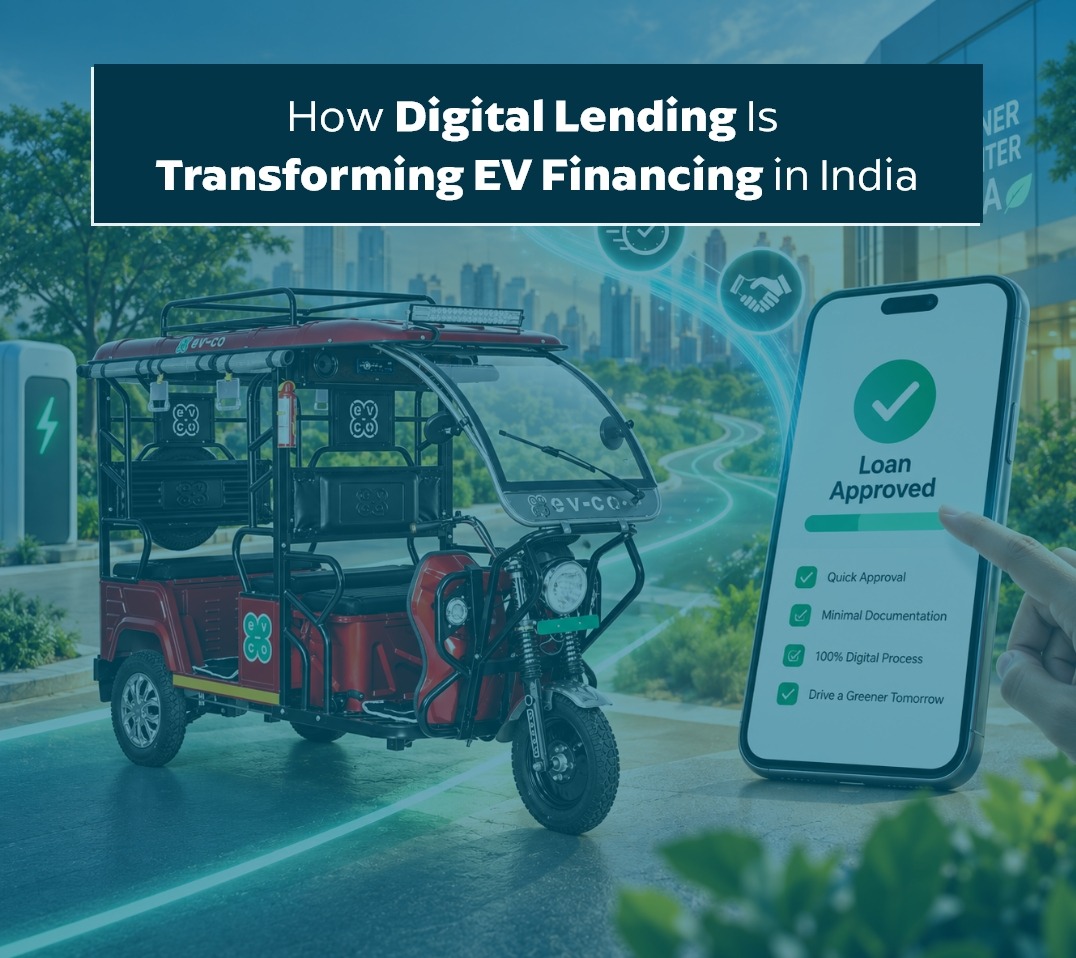
How Digital Lending Is Transforming EV Financing in India
India's electric vehicle (EV) market is developing rapidly creating new opportunities for consumers businesses fleet operators and commercial vehicle owners. As the demand for electric mobility grows access to convenient and efficient financing is becoming increasingly important.
Traditional vehicle financing often involves physical documentation branch visits and multiple steps before an application is processed. Digital lending is changing this process by using online applications electronic documentation automated verification and technology-enabled credit assessment.
For EV buyers digital lending can make the financing journey more convenient while helping lenders manage applications more efficiently. As the EV ecosystem continues to develop technology is likely to play an increasingly important role in the way electric vehicles are financed in India.
What Is Digital Lending?
Digital lending refers to the use of technology to provide and manage financial services through digital channels. Instead of completing every stage of a financing process manually customers can submit information and documents online.
Depending on the lender and product a digital lending journey may include:
- Online loan applications
- Digital document submission
- Identity verification
- Automated eligibility checks
- Digital credit assessment
- Electronic agreements
- Online application tracking
- Digital communication and notifications
The exact process varies between lenders but the overall objective is to make financing more accessible and operationally efficient.
Why Digital Lending Matters for EV Financing
EV financing comes with its own set of considerations. Buyers may be interested in electric two wheelers cars three-wheelers or commercial EVs each with different usage patterns and financial requirements.
Digital platforms can help organise the information required during the financing process. Customers can submit their details remotely while lenders can use technology to process applications and verify information according to their internal policies.
This can be particularly useful for customers who may not have easy access to a physical branch or who prefer completing financial processes online.
Faster and More Convenient Loan Applications
One of the key changes associated with digital lending is the ability to begin a financing application online.
Instead of visiting a branch at every stage an applicant may be able to provide information upload documents and receive application updates digitally.
For EV buyers this can simplify the process of exploring financing options while purchasing a vehicle.
However digital processing does not necessarily mean that every application will receive instant approval. Eligibility documentation credit assessment and lender-specific requirements still apply.
Digital Documentation and Verification
Documentation is an important part of vehicle financing. Digital lending can reduce dependence on physical paperwork by allowing customers to submit documents electronically.
Technology can also support identity verification and information validation through digital processes subject to applicable requirements and the lender's procedures.
This can reduce manual handling and help organise application records more efficiently.
For customers digital documentation can also make it easier to access and submit required information from a smartphone or computer.
Data-Driven Credit Assessment
Digital lending enables financial institutions to use technology to process and analyse information during credit assessment.
Depending on the lender's systems and applicable regulations digital processes can help organise information related to the applicant's financial profile credit history income and other relevant factors.
For EV financing additional information about the vehicle and its intended use may also be relevant particularly in commercial lending.
Technology can support the assessment process but lending decisions remain subject to the lender's eligibility criteria risk policies and applicable regulations.
Digital Lending for Electric Three-Wheelers
Electric three-wheelers are used across passenger transportation delivery and last-mile logistics. Many operators depend on these vehicles as income-generating assets.
For such customers convenience and accessibility in financing can be important. A digital application process can allow operators to begin the financing journey without making repeated branch visits.
Digital tools can also support communication document collection and application tracking.
However commercial EV financing still requires careful consideration of factors such as borrower profile expected vehicle utilisation operating costs and repayment capacity.
Technology and EV Financing Transparency
Digital lending platforms can make it easier for customers to access information about their financing application.
Depending on the lender customers may be able to view:
- Application status
- Required documents
- Loan terms
- Repayment schedules
- Important notifications
- Payment information
Having information available through digital channels can help customers understand the different stages of their financing journey.
Borrowers should still carefully review the applicable interest rate processing fees repayment schedule total repayment amount and other terms before accepting a financing offer.
The Role of Digital Payments
Digital lending is closely connected with the wider digital payments ecosystem. Once financing is established borrowers may use digital channels for repayments and account related services depending on the lender's available facilities.
Digital payment systems can make recurring financial transactions more convenient and can reduce reliance on cash-based processes.
For commercial EV operators who manage regular business expenses having digital access to financial services can simplify day-to-day financial management.
Benefits for Lenders
Digital lending does not only change the customer experience. It can also help lenders streamline internal processes.
Technology can support:
- Application management
- Document processing
- Customer communication
- Verification workflows
- Data organisation
- Repayment monitoring
Automation can reduce certain manual tasks and allow lenders to manage applications through structured digital workflows.
The extent of automation varies between financial institutions and products and human review may remain part of the process.
Challenges in Digital EV Lending
While digital lending offers several advantages it also comes with challenges.
Data Security
Financial applications involve sensitive customer information. Lenders and digital platforms need appropriate security and privacy measures to protect data.
Digital Accessibility
Not every customer has the same level of access to smartphones reliable internet connectivity or digital financial services. Digital lending should therefore account for different levels of digital accessibility.
Understanding Loan Terms
A fully digital process can make applications convenient but borrowers still need to understand the financial agreement. Customers should review all applicable charges repayment obligations and conditions before accepting finance.
Responsible Lending
Technology can improve processing efficiency, but responsible lending still requires appropriate assessment of the borrower's ability to repay.
How Digital Lending Can Support EV Adoption
Financing is an important part of vehicle ownership particularly when customers cannot or do not want to pay the entire purchase price upfront.
By making financing processes more accessible and technology driven digital lending can support customers who are considering electric vehicles.
For businesses, digital financing can also help simplify the process of evaluating funding for commercial EVs, including electric three-wheelers and delivery vehicles.
The impact of digital lending will ultimately depend on factors such as customer demand financing availability technology adoption, infrastructure and the broader development of India's EV market.
The Future of Digital EV Financing in India
The future of EV financing is likely to involve greater integration between vehicle platforms digital financial services payment systems and data-driven processes.
As EV technology develops financing providers may also adapt their assessment models to account for factors such as battery technology, vehicle usage charging infrastructure and ownership costs.
Digital platforms may increasingly support customers throughout the financing lifecycle from application and verification to repayment and account management.
For borrowers this could mean a more connected financing experience although traditional financial assessment and lending requirements will continue to remain important.
AMU and the Digital EV Financing Ecosystem
As India's mobility sector moves towards greater electrification financing providers need to understand both the financial and operational requirements of EV customers.
AMU operates in an environment where digital processes and changing mobility requirements are becoming increasingly relevant to vehicle financing. Technology can help make the financing journey more organised and accessible while supporting efficient application and account management.
For EV borrowers the focus remains on choosing financing that matches their vehicle requirements financial capacity and repayment ability.
Conclusion
Digital lending is changing how customers and financial institutions approach vehicle financing in India. Online applications, digital documentation technology enabled verification automated workflows and digital payments can make the financing journey more convenient and efficient.
For the EV sector, these developments can be particularly relevant as more individuals commercial operators and businesses explore electric vehicles.
However technology does not replace the importance of responsible financial decision-making. Borrowers should evaluate eligibility interest rates fees repayment schedules and total borrowing costs before choosing an EV financing option.
As India's electric mobility ecosystem continues to evolve the combination of digital lending and EV financing can contribute to a more
technology driven financial environment for electric vehicle buyers and businesses.
FAQs
1. What is digital lending for electric vehicles?
Digital lending uses online technology to support the vehicle financing process. It can include online applications digital document submission, verification credit assessment electronic agreements and digital account services.
2. How can digital lending make EV financing easier?
Digital lending can reduce the need for repeated physical visits by allowing customers to complete certain application and documentation steps online. It can also provide digital access to application updates and other financing information.
3. Can electric three-wheelers be financed through digital lending?
Depending on the lender and available financing products eligible electric three-wheelers may be financed through digital or technology-enabled lending processes. Eligibility and documentation requirements vary between lenders.
4. Is digital EV financing completely automated?
Not necessarily. Technology can automate certain parts of an application and verification process but eligibility checks credit assessment and other lending decisions remain subject to the lender's policies and applicable requirements.
5. What should borrowers check before choosing digital EV finance?
Borrowers should review the interest rate processing fees repayment schedule total repayment amount, eligibility conditions and other applicable terms. They should also ensure that the financing obligation is suitable for their repayment capacity.